Recycling and Sustainability — Flat Clearance Enfield
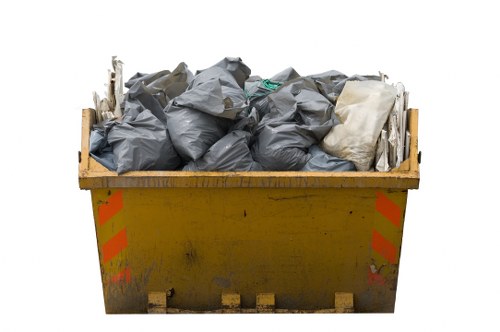
Flat Clearance Enfield is committed to delivering an eco-friendly waste disposal area approach to every clearance project. Our focus on a sustainable rubbish area strategy means we go beyond simple removal: we sort, recover and rehouse items wherever possible. Through careful separation and collaboration with local partners we minimise landfill, maximise reuse and support borough-wide recycling efforts. Residents and landlords can expect clear processes that mirror the borough's own approach to waste separation — separating food, paper/card, glass and containers — while we handle bulky and mixed items responsibly.Our recycling and sustainability page explains how we meet local expectations and exceed industry norms. We operate with an emphasis on low-carbon logistics and evidence-based diversion targets so that every clearance contributes to a greener Enfield.
Our Recycling Percentage Target and Reporting
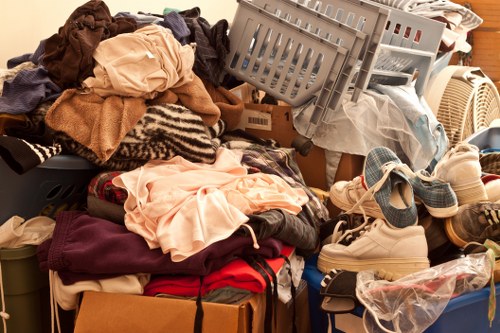
We have set a clear recycling percentage target to ensure measurable progress: our ambition is to achieve a 70% recycling rate of all materials collected from flat clearances by 2030, with a near-term goal of 60% within three years. This target covers materials sent for recycling, reused through charity partnerships and processed at authorised transfer stations. We publish internal progress reports and work with local transfer stations to verify tonnage streams. These targets are aligned with modern sustainable waste disposal standards and support Enfield borough's broader waste reduction plans.Local Transfer Stations and Sustainable Processing
We operate with approved local transfer stations and materials recovery facilities (MRFs) around the borough and neighbouring North London facilities to ensure materials are processed correctly. Typical destinations include recycling MRFs for mixed dry recyclables, specialist facilities for electronic waste (WEEE), and furniture reprocessing centres for reusable items. Our routing decisions prioritise low-mileage transfers and authorised processing to guarantee that items counted toward our recycling percentage target are actually recycled or reused — not incinerated or landfilled.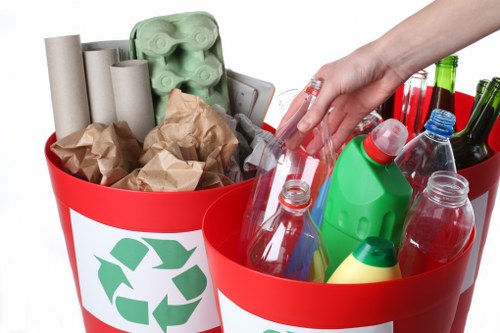 Partnerships with charities and social enterprises form a cornerstone of our sustainability model. Working with local charities, furniture reuse groups and textile redistribution organisations allows us to place serviceable items back into circulation. Examples of typical partnerships include:
- Furniture and soft-furnishing charities that refurbish and rehome household items
- Textile redistribution schemes that sort and process clothing for reuse
- Electronics charities and specialist WEEE collectors for safe refurbishment
Operational transparency is essential: we log donated items, document transfers to charities and share aggregated diversion figures to support community accountability.
Low-Carbon Vans and Sustainable Logistics
Our fleet includes a growing number of low-emission vans and vehicles specifically chosen for urban clearances. Low-carbon vans reduce the environmental impact of each job and are used wherever access and load requirements allow. We combine this with route optimisation software, consolidated pick-ups and scheduled runs to local transfer stations to lower fuel use and emissions. Where heavier loads are unavoidable, we coordinate with larger low-emission trucks scheduled on consolidated days to cut mileage across the borough.How the Borough's Waste Separation Supports Our Work
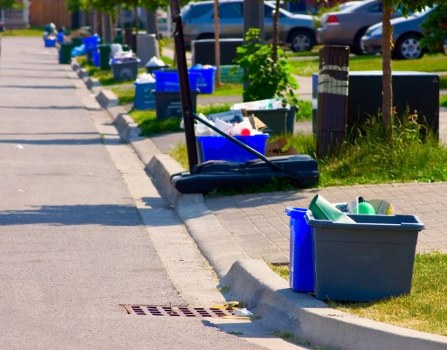
Enfield borough encourages household separation into food waste, glass, paper/card and container streams, and provides bulky waste collection options. Our team mirrors these streams during clearances, separating:- Organic and food-contaminated waste for appropriate treatment
- Paper, cardboard and mixed packaging for MRF processing
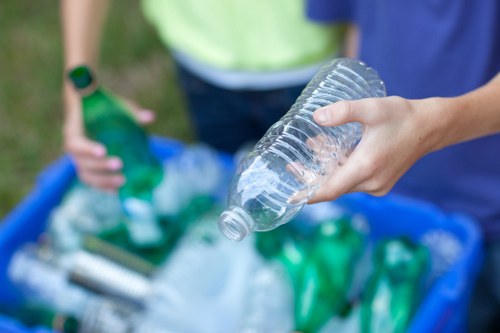
- Glass and rigid plastics directed to specialised recycling banks or facilities
- Bulky household items assessed for reuse or routed to furniture reuse centres
 Service features that support sustainability:
- Pre-clearance audits to identify reusable items and hazardous materials
- On-site sorting to reduce contamination and increase recycling yields
- Partnership-led donations that expedite reuse of serviceable furniture and household goods
Measuring Success and Continuous Improvement
We measure success through diversion rates, the weight and type of materials reused or recycled, and reductions in vehicle miles for each job. Regular audits at local transfer stations confirm tonnages and destination streams. Our target of a 70% recycling rate by 2030 is supported by incremental yearly goals, partnership expansion and investment in greener vehicles. Continuous improvement means adapting to changes in local collection rules, advances in recycling technology and evolving charity partner needs.Community engagement is key. We run awareness initiatives (leaflets and local information campaigns) that reflect the borough's messaging on separation and encourage clients to help sort items before our arrival. This small amount of pre-sorting significantly improves recycling outcomes and reduces processing costs.
Our commitment is to provide a professional clearance service that places sustainability at the front of every operation. From utilising low-carbon vans to partnering with charities and verified transfer stations, Flat Clearance Enfield ensures that clearances contribute to a cleaner, greener borough. Strong targets, transparent reporting and practical reuse pathways turn clearances into positive environmental actions for Enfield residents and property owners.